Is AI erasing the role of the human translator, or transforming it?
According to a recently published Microsoft report, translation ranks as the most “AI-applicable” profession, with a 98% task-coverage score1 —an empirical confirmation of a transformation long perceived within the industry.
When I read the Microsoft report identifying translation as the frontier of AI-driven displacement, I immediately thought of many colleagues and peers in the multilingual field who are currently navigating a structural upheaval that is as economic as technological.
This data point has become a lightning rod for the industry. For AI enthusiasts, it signals a future of barrier-free global communication. For professionals, however, it is a stark warning that ignores the cultural nuance, emotional intelligence, and domain-specific expertise that human translators provide in the era of automation.
This analysis examines the major shifts defining the translation industry in 2025, including the rise of machine translation, the growing dominance of corporate automation, and the emergence of the “Slow Translation” movement as resistance. As AI systems increasingly handle high‑volume translation tasks, human nuance, cultural interpretation, and ethical accountability are becoming pressure points in an industry racing toward efficiency.
The Hidden Risks of AI Language
Recent evidence reviews point to a critical inflection point for the translation industry, in which the drive for algorithmic efficiency is clashing with the foundational necessity of professional accountability. 2
While language AI tools, including neural machine translation and large language models, are increasingly integrated into high-stakes environments like the UK National Health Service, to address communication gaps and financial constraints, they introduce a spectrum of unmanaged risks ranging from systemic misinformation to potential patient harm.3
The report identifies a significant “accountability gap” in the industry, noting that while AI applicability is near-universal, its outputs in specialized domains like healthcare consistently produce critical errors that demand intensive human intervention.
From Skilled Intellectual Practice to Automated Volume
Taken together, these findings indicate that the future of professional translation lies not in competing with automation, but in providing the “human glue“: a sort of cultural, ethical, and clinical oversight, that remains fundamentally beyond the reach of probabilistic AI systems.
But here is a question: How is the translation market currently arranged, and what structural forces have transformed it into an ecosystem of automated volume?
According to The Slator 2025 Language Service Provider Index (LSPI) companies grew 6.6% in 2024 to more than USD 8.4bn. This is, undoubtedly, an attractive headline rate.4 However, a significant share of this growth reflects AI-driven consolidation and/or a redistribution of market share, rather than an expansion of value creation.The primary mechanism of this shift is the rollout of machine translation post-edition workflows, which effectively downgrade translation from a skilled intellectual practice to a low‑level data‑editing task.
Under this machine‑first operational model, large language service providers increasingly channel vast quantities of enterprise content through automated processing pipelines. Human translators intervene only at the final stage, where they are tasked with correcting or “post‑editing” the machine‑generated drafts. Consequently, the nature of their professional contribution is redefined: instead of being remunerated for the full intellectual and interpretive labour of translation, they are compensated primarily for the mechanical refinement of algorithmic output, and typically at substantially reduced rates.
This steady reduction in per‑unit pay, combined with the loss of creative control and professional autonomy, leaves even highly experienced translators facing a difficult choice. They must either adapt to a role that offers less income and less recognition, or leave the profession altogether as the economic conditions become unsustainable. For many, this shift brings a profound sense of discouragement and displacement, as the craft they once valued becomes increasingly undervalued and unrecognizable.
Resisting the Machine
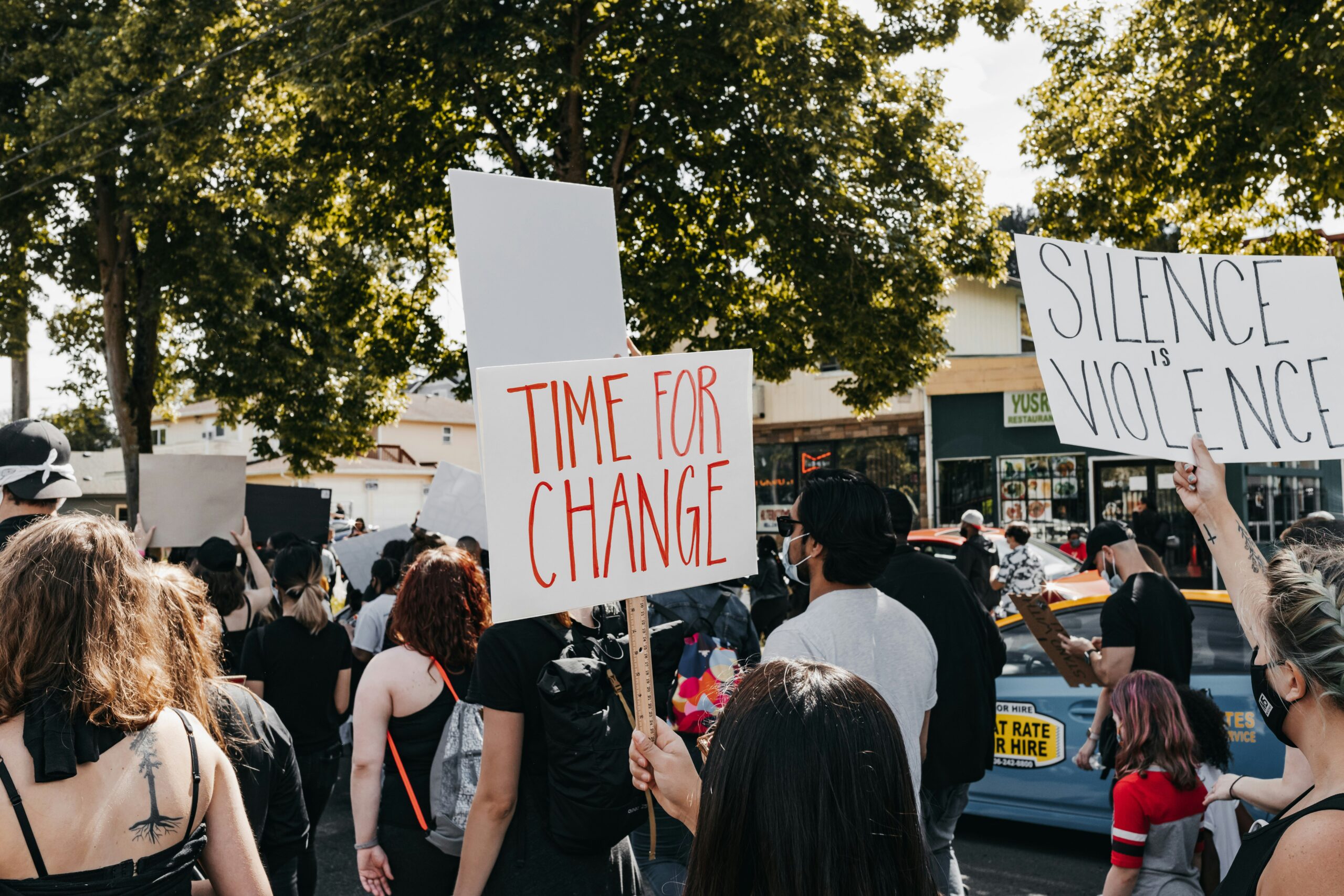
In response to the accelerating automation of translation, movements such as Translators Against the Machine and the UK Institute of Translation and Interpreting (ITI) “Slow Translation” philosophy have emerged as analytical counterweights. These initiatives do not reject technology outright; rather, they challenge the economic and ethical assumptions underpinning its current deployment.
Translators Against the Machine, associated with groups like the Guerrilla Media Collective, actively resists the “uberization” of the market.5 The initiative critiques the unethical extraction of translators’ data to train models designed for their own displacement.6
Similarly, the Slow Translation Manifesto, issued by the UK Institute of Translation and Interpreting, advocates for a cultural revolution that prioritizes artistry and professional judgment over automation.7 Arguing for human translation as a deliberate, thoughtful intellectual process demands the time necessary for research and cultural nuance that probabilistic models cannot replicate.
The French Translators Society has articulated a comparable position, stating that while generative AI may serve as an assistant to human expertise, it should never supplant professional translators and must always be used with the utmost caution.8
Voices from the Field
While a segment of the linguistic community remains engaged in developing new industry initiatives, there is a growing and well-documented trend of senior translators leaving the field in favor of alternative professions.
To better understand the forces driving this mass professional migration, I spoke with some experienced translators from different regions.
Thomas d’Aquin Tabi Nkoumavok’s 15-year career in Cameroon offers a localized snapshot of a global industry crisis, where the aggressive integration of AI and Machine Translation has fundamentally devalued the linguistic profession.
Since 2019, he has faced a significant loss of long-term clients and a dramatic reduction in workload, with his remaining steady income shifting from creative translation to Machine Translation Post-Editing (MTPE) and revision. This transition is marked by a severe economic squeeze: not only have market rates declined, but clients increasingly demand high-quality “standard” translation results while only paying the lower, discounted rates associated with automated workflows.
A similar pattern emerges in Europe. English-Spanish Language Consultant, Santiago Rodriguez with more than 25 years in the linguistic field, based in Spain, notes that technologies have altered his workflow significantly. He explains that over the past 2-3 years, his role has clearly shifted toward post-editing and quality control. Although Santiago has managed to maintain his nominal rates, he emphasizes that overall volumes and income have declined.
Adapt or Atrophy
A shared concern in both interviews is the risk of framing AI as either a miracle solution or an existential threat. The real fault line, they argue, lies not in the technology itself but in how translation professionals understand and apply it. The industry is not facing an AI crisis so much as a competence and education crisis.
One core theme is the linguistic depth required to use AI responsibly. Thomas emphasizes that translation is fundamentally a semantic and morphosyntactic craft, and far more complex than the “word swapping” many imagine. In his view, AI becomes genuinely hazardous only when operated by someone lacking this foundation. With the right expertise, however, it functions as a strategic support tool: a system that enhances productivity while still depending on a skilled human pilot to safeguard meaning. His work in “De la sémantique à la traduction” underscores this point, arguing that without conceptual mastery, a translator cannot meaningfully guide any technological aid, AI included.
The second theme concerns the limits of AI and the consequences of its indiscriminate use. Santiago acknowledges AI’s utility for high-volume, low-stakes content, but warns that applying it to complex texts undermines the very notion of professional judgment. In his perspective, the danger is economic as much as linguistic. When clients apply AI uniformly across all content types, they misinterpret cost-efficiency as expertise, eroding both quality and respect for the craft.
These views converge on a single point: AI’s effects hinge on the expertise guiding it. Without that expertise, it lowers standards and obscures professional judgment; with it, AI becomes a tool of adaptation that strengthens rather than diminishes the field.
Different Parts of The Same Puzzle
Another major theme emerging from the interviews concerns the evolving risks AI introduces, not only technical but ethical, structural, and economic. Both Thomas and Santiago outline a profession undergoing profound transformation, though each highlights a different dimension of that shift.
One dimension is the ethical fragility of AI‑mediated language. Thomas argues that the threat posed by AI extends far beyond isolated translation errors. Because Large Language Models generate text through statistical prediction rather than cultural reasoning, they tend to reproduce the ideological defaults embedded in their training corpora. From this vantage point, AI risks normalizing bias rather than merely reflecting it. This shift reframes the translator’s role: no longer primarily a content producer, the translator becomes an Ethical Gatekeeper responsible for detecting the “surface-level fluency” of AI output: prose that reads smoothly but may rest on culturally hollow or ethically skewed assumptions. The human contribution, in this framework, lies in discernment and correction, not in speed.
A second theme concerns the profession’s economic restructuring. Santiago argues that large‑scale automation and the “uberization” of workflows have made the traditional generalist model increasingly unsustainable. Instead of resisting these shifts, he proposes repositioning translators as strategic consultants. By moving from per‑word production to high‑level oversight such as expert review, domain‑specific judgment, and quality assurance, translators can reclaim agency in areas AI cannot replicate. In this view, Machine Translation Post‑Editing becomes a site for specialized intervention rather than a professional downgrade.9
Together, these perspectives reveal an industry confronted with dual pressures: the ethical opacity of probabilistic AI and the commodifying forces reshaping market expectations.
Both challenges, however, point toward the same conclusion: the future of translation depends not on outpacing machines, but on redefining professional value in areas where machines cannot lead.
Good Enough and the Price We Pay
At this point, it becomes clear that the digital metamorphosis of the translation industry amounts to a fundamental redefinition of value.
If we follow the trajectory outlined in the 2025 Microsoft and Surrey reports, the “human glue” is a critical fail‑safe. As Thomas and Santiago both suggest, the danger isn’t that AI will become “too smart,” but that the industry will grow comfortable with “good enough”: a standard in which outputs that merely function at a basic, surface level are accepted as sufficient even when they jeopardize nuance, accuracy, and cultural intent.
When a corporate world bypasses the human translator to save on margins, it ignores the ethical accountability that prevents global communication from becoming a hall of mirrors. This carries far more serious implications, as even small distortions can trigger legal, financial, or safety‑critical consequences.
Translators are unanimous: while AI may carry the volume, humans will always carry the meaning.
The unresolved question now presses harder than ever: will organizations acknowledge the depth and importance offered by “humanised” translation before the text just dissolves into a sequence of automated approximations?
References
- Tomlinson, K., Jaffe, S., Wang, W., Counts, S., & Suri, S. (2025). Working with AI: Measuring the applicability of generative AI to occupations. En arXiv [cs.AI]. https://doi.org/10.48550/arXiv.2507.07935
- Research portal. (s. f.-b). https://openresearch.surrey.ac.uk/esploro/outputs/report/Full-report-Evidence-review-of-use/99990364702346
- Wikipedia Contributors. (2019, May 21). Neural machine translation. Wikipedia; Wikimedia Foundation. https://en.wikipedia.org/wiki/Neural_machine_translation
- Slator. (2025, February 21). The Slator 2025 Language Service Provider Index. Slator. https://slator.com/2025-language-service-provider-index/
- Sara. (2023, noviembre 6). Translators against the Machine: a call to arm ourselves against precarity, technological tyranny and obsolescence. Guerrilla Media Collective. https://www.guerrillamedia.coop/en/translators-against-the-machine-a-call-to-arm-ourselves-against-precarity-technological-tyranny-and-obsolescence/
- Cambridge English Dictionary. (n.d.). UBERIZATION | meaning in the Cambridge English Dictionary. Dictionary.cambridge.org. https://dictionary.cambridge.org/dictionary/english/uberization
- Slow translation manifesto. (s/f). Org.uk. Recuperado el 26 de enero de 2026, de https://www.iti.org.uk/discover/policy/slow-translation-manifesto.html
- Société française des traducteurs. (2024, July 4). Statement on artificial intelligence by the Steering Committee of the Société française des traducteur. https://www.sft.fr/global/gene/link.php?doc_id=551&fg=1
- Postediting. (2023, May 6). Wikipedia. https://en.wikipedia.org/wiki/Postediting