In an industry hungry for resources and investments, tech companies are building massive data centers around the world with the goal of advancing AI 1.
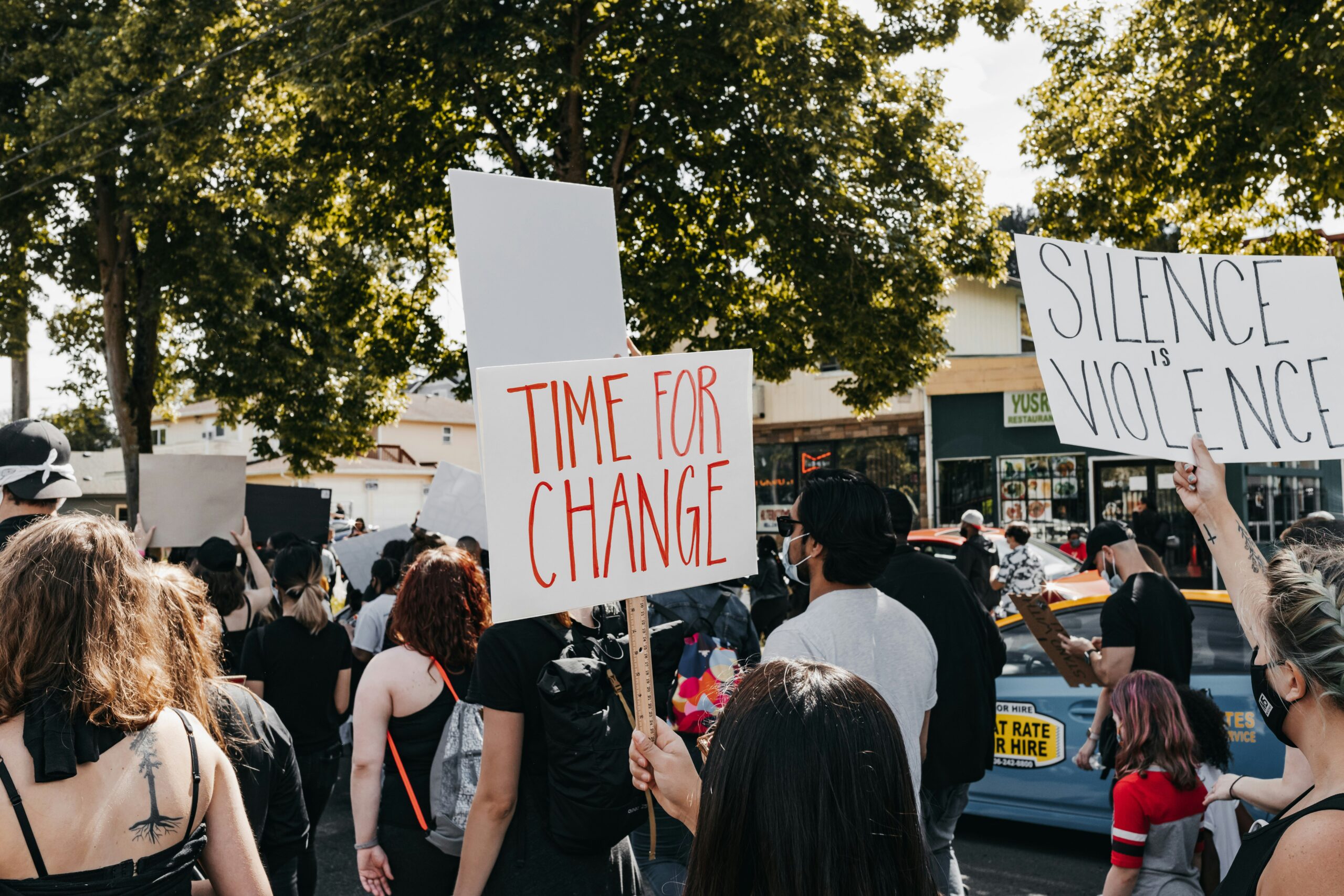
But grassroots opposition is growing, and communities are starting to challenge giants like Google, Amazon, and Microsoft.
A recent report published by Data Center Watch has shown how, between March and June 2025, local opposition in the United States managed to block or delay US$98 billion in data center projects 2.
While governments have often struck deals with tech companies, grassroots organizations are bringing together people across the political spectrum, showing that the power of democracy and activism still holds the power to ignite change and begin with citizens.
Data Centers Impact Your Pockets
To understand the energy impact of data centers, it is important to take into account that water and electricity are consumed not only for training AI models, but also for queries related to digital services like streaming recommendations on Netflix or matching a driver on Uber 3.
The AI boom has brought the scale and consumption of data centers to a new level: it is forecasted that by 2035, data centers will represent more than 4% of the global electricity utilization (Saul et al., 2025). To put this in context, only the US, China and India are going to consume more than all data centers put together.
It is no surprise that the consequences of this massive energy consumption are starting to be reflected in electricity costs. An investigation conducted by Bloomberg has found that the electricity price per month has risen by 267% in five years in American cities located near data centers (Saul et al., 2025).
The impact of data centers is also felt in other regions of the world. In fact, according to Synergy Research Group, almost 60% of the world’s largest data centers are located outside the US 4.
Data centers already consume 20% of electricity in Ireland, while Chile and Mexico are facing water shortages and pollution in areas near data centers. South Africa, the UK, Spain, the Netherlands, India, Malaysia, Singapore and Brazil have faced comparable issues 5.
Finally, the noise and light pollution caused by data centers’ cooling systems cannot be underestimated, considering they have to be constantly in function to prevent servers from overheating 6.
Deals Behind the Curtain
When thinking about regulation, there is a convergence of interests between big tech and governments. In fact, it is often national and regional officials who have provided access to public land, resources and tax breaks to tech companies, which are bringing to the table the promises of jobs and innovation.
In some cases, like in Spain, local mayors have found out about the deals in their municipalities only after the projects have been announced at the regional level and in the press 7.
In the United States, AI infrastructure expansion is considered a national security priority by the US political establishment. Also, several influential actors like unions, utility companies and the fossil fuel industry all benefit from the construction of data centers and the economic development they are supposed to create 8.
And this is particularly attractive for areas and municipalities that have struggled economically and see a valuable chance to attract investment from major companies, hoping to revive the local job markets 9.
But these projections are more often than not left unmet: one example is the case of Romania and the Netherlands in Europe, where the NGO AlgorithmWatch has found out that only a quarter of the forecasted new jobs have effectively been created 10.
It is also very true that to build data centers, companies like Google, Amazon and Microsoft can hide their presence by relying on subsidiaries and service providers. This way of operating makes it easier for them not to be fully transparent about their resource consumption (Mozur, Satariano, & Rodríguez Mega, 2025). When adding the promises of investments and job opportunities, we can understand how government officials can be drawn to these arrangements.
The Rise of Grassroots Opposition
Where regulatory frameworks have lagged behind the pace of development, communities have increasingly organised to respond.
In the US, the issue of data centers has been nicknamed ‘the great unifier’, as it brought together people of all political backgrounds, which is very surprising considering the polarization that characterizes American politics.
In December 2025, a coalition of over 230 national, state and local environmental groups from across the US sent a letter to Congress demanding a national moratorium on new data centers 11.
But what surprises the most are the reports published by Data Center Watch, which show the real impact of grassroots opposition to data centers in the United States.
Between May 2024 and March 2025, local opposition has blocked or delayed $64 billion in data center projects 12.
Virginia, a state with one of the highest concentrations of data centers, has become the main hub for grassroots opposition, with more than 42 activist groups and the foundation of the Data Center Reform Coalition to coordinate among the different organizations 13.
The period between March and June 2025 has seen an even further increase in grassroots action: 20 projects worth $98 billion were blocked or delayed by local activists.
The number of grassroots opposition groups has reached a total of 188 across the US.
Opposition to data centers is growing into a powerful and vocal political force, proving decisive in the outcome of governor elections in Virginia and New Jersey 14.
But this pattern is not limited to the United States. Europe, where the presence of the EU has usually provided tighter regulatory frameworks, is also witnessing a rise in opposition groups starting at the local and regional level in Spain, France, Ireland, and the Netherlands.
Some, like Tu Nube Seca Mi Río in Spain, campaign against data centers’ water consumption in areas vulnerable to droughts 15. Others, like the Dutch Save the Wieringermeer, are opposing data center construction in rural farmlands 16.
So, how do people get together and take action when data centers are planned in their area? Different NGOs and independent research groups, like AlgorithmWatch (Blackmon, 2025), MediaJustice and the AI Now Institute, are providing toolkits to help grassroots groups and to shape local and state policies in resisting data centers 17 18.
This includes reviewing the zoning, gathering official documents and using Freedom of Information laws to uncover the real environmental impacts of planned projects.
Bringing in independent experts like hydrologists, energy analysts, environmental lawyers, and urban planners can help further expose hidden costs and risks.
The AI frenzy does not look like it is ending soon, with tech companies sitting at the same table with government officials. Despite this, grassroots organizations are proving that advocacy can still hold the powerful accountable and push for political action.
Much more is needed in terms of regulations and policies, but some of the most recent developments are somewhat encouraging. As of early February 2026, the US Government is drafting a compact agreement with major tech companies to ensure data centers do not increase electricity prices or put a burden on water supplies 19.
The fact that this is coming from the Trump administration, which has a history of pro-business policies, shows that the discourse on data centers’ impact has moved up.
References
Photo: Thanks to Taylor Vick on Unsplash
- Migliorini, D. (2025, December 23). The AI bubble could burst beyond Wall Street. Digital Peace. https://digital-peace.org/the-ai-bubble-could-burst-beyond-wall-street/
- Data Center Watch. (2025). Q2 2025 update: Data center opposition and project delays [Report]. Data Center Watch. https://www.datacenterwatch.org/q22025/
- Saul, J., Nicoletti, L., Pogkas, D., Bass, D., & Malik, N. (2025, September 29). AI data centers are sending power bills soaring. Bloomberg.com. https://www.bloomberg.com/graphics/2025-ai-data-centers-electricity-prices/
- Synergy Research Group. Strategic market intelligence for emerging IT & cloud. Synergy Research Group. https://www.srgresearch.com/
- Mozur, P., Satariano, A., & Rodríguez Mega, E. (2025, October 20). From Mexico to Ireland, fury mounts over a global A.I. frenzy. The New York Times. https://www.nytimes.com/2025/10/20/technology/ai-data-center-backlash-mexico-ireland.html
- Bacurin, L. (2026, February 17). The hidden data centers powering the AI revolution: Environmental impact of AI data centers explained. Digital Peace. https://digital-peace.org/environmental-impact-ai-data-centers/
- Blackmon, S. (2025, November 13). How to resist data centers: A guide for local communities in Europe. AlgorithmWatch. https://algorithmwatch.org/en/a-guide-to-data-centers/
- McDonald, H. (2026, January 13). ‘A perfect, wild storm’: Widely loathed datacenters see little US political opposition. The Guardian. https://www.theguardian.com/us-news/2026/jan/13/datacenters-us-political-opposition
- Murphy, R., & Feng, E. (2025, July 17). Why more residents are saying “no” to AI data centers in their backyard. NPR. https://www.npr.org/2025/07/17/nx-s1-5469933/virginia-data-centers-residents-saying-no
- Besliu, R., Narawad, A., & Toniolo, A. (2025, July 24). Infrastructure or intrusion? Europe’s conflicted data center expansion. AlgorithmWatch. https://algorithmwatch.org/en/infrastructure-intrusion-conflict-data-center/
- Food & Water Watch. (2025, December 8). 230+ groups call for national moratorium on new data centers. Food & Water Watch. https://www.foodandwaterwatch.org/2025/12/08/230-groups-call-for-national-moratorium-on-new-data-centers/
- Data Center Watch. $64 billion of data center projects have been blocked or delayed amid local opposition [Report]. Data Center Watch. https://www.datacenterwatch.org/report
- Piedmont Environmental Council. (2024, January 22). Virginia Data Center Reform Coalition. Piedmont Environmental Council. https://www.pecva.org/region/regional-state-national-region/general-assembly/virginia-data-center-reform-coalition/
- Milman, O. (2025, December 8). More than 200 environmental groups demand halt to new US datacenters. The Guardian. https://www.theguardian.com/us-news/2025/dec/08/us-data-centers
- Tu Nube Seca Mi Río. (2026). Impacto ecosocial de los centros de datos. https://tunubesecamirio.com/
- Stichting Red de Wieringermeer. Red de Wieringermeer: Visie, standpunten en informatie over lokale ontwikkeling (Home page). https://reddewieringermeer.nl/Home/
- MediaJustice. (2025, September 17). The people say no: Resisting data centers toolkit [PDF]. MediaJustice. https://mediajustice.org/wp-content/uploads/2025/09/MediaJustice-The-People-Say-No-Resisting-Data-Centers-Toolkit.pdf
- AI Now Institute. (2025, December 3). North Star data center policy toolkit: State and local policy interventions to stop rampant AI data center expansion [Policy guide]. AI Now Institute. https://ainowinstitute.org/publications/data-center-policy-guide/
- Cai, S., Plautz, J., & Bikales, J. (2026, February 9). White House eyes data center agreements amid energy price spikes. Politico. https://www.politico.com/news/2026/02/09/trump-administration-eyes-data-center-agreements-amid-energy-price-spikes-00772024