The last time you backed up your vacation pictures onto Microsoft Cloud or asked ChatGPT a question, did you consider what goes on behind the scenes? The nebulous nature of the internet, the cloud, streaming services, and AI makes them easy to take for granted; they seem to exist only on our phones and laptops. However, all of these virtual services require extensive networks of data centers humming with servers, and these data centers ravenously consume our power and water resources.
But what is a data center?
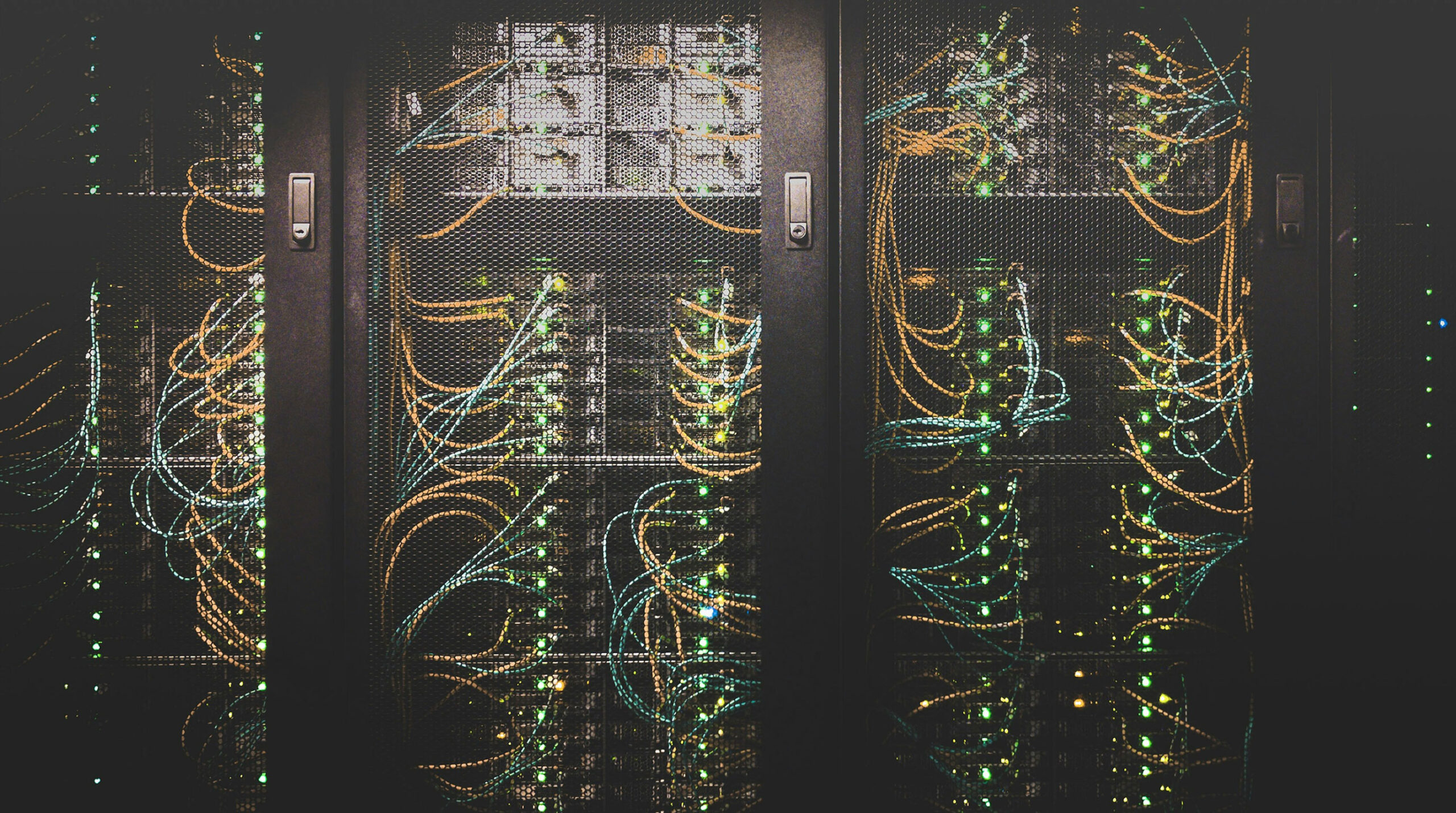
Data centers house the servers, cooling equipment, and power systems that store, process, and transmit the data that make websites, email, cloud computing, AI, and streaming possible. To keep them constantly running requires redundant power sources like generators to prevent outages.1 In the past, companies maintained their own servers on-site, but as the world’s data needs have exploded, data centers have arisen as safer and cheaper alternatives.2 These centers exist at a range of sizes from a few servers to the largest hyper centers the size of large shopping malls.3
Why is there such a sizable increase in data centers?
Data centers have existed for decades, but their numbers are expected to rise exponentially. In the US, home to around half the world’s data centers, the number of centers quadrupled between 2018 and 2025,4 and global data center capacity is expected to double in four years. 5
Cloud computing had been the main driver behind data center growth until the recent rise of AI. Because AI computations require servers housed in data centers, as AI usage increases, so too will the demand for data centers.6 In just two years, experts project that AI will demand over half of data centers’ electricity. 7However, existing data centers are not equipped to handle this, so big names in tech, like Amazon, Meta, and Google, are investing in their own data centers dedicated to AI (Ewim et al., 2023). Meta is investing $10 billion to construct the largest data center to date in Louisiana (US), and other companies have similar plans.8
Environmental Effects
Whether the claims that AI will revolutionize our lives remains to be seen, but data centers’ impacts on the environment are clear. Centers demand copious amounts of energy and water and result in other side effects including emissions and pollution.
Energy & Electricity
Data centers create environmental problems because of the resources needed to power and maintain them. Although data centers comprise a little more than 1% of the world’s electricity consumption, with the continued importance of cloud computing and AI, experts estimate that by 2030 that number with increase 160%.9 The energy required to power the buildings, servers, and cooling equipment is responsible for data centers’ large power needs. Equipment must run continuously and requires redundant power to avoid outages.
Beyond the energy powering the servers, the second biggest culprit of data centers’ energy use is their cooling systems (Leppert, 2025). Servers generate a lot of heat and to keep them from overheating requires large-scale cooling systems (Ewim et al., 2023). Although data centers had been becoming more efficient, this had begun to level off. With AI demands, any efficiency is likely to be lost (de Roucy-Rochegonde & Buffard, 2025).10 Training AI models is extremely energy and water intensive, and a single query uses 10 times more energy than a basic google search (de Roucy-Rochegonde & Buffard, 2025). We explore the broader environmental impact of AI in greater depth in a related article.
In the short term, the boom in energy demand for AI is leading to a rise in fossil fuel and nuclear- powered electricity. To meet these demands, there are plans to extend operation of coal-powered plants and even to reopen closed plants.11 In Virginia, home to the largest number of data centers in the US, 40% of their electricity is powered by natural gas (O’Donnell & Crownhart, 2025). To support the biggest center to date, Meta’s new data center in Louisiana, the state plans to build three natural gas power plants.12
Major tech companies, including Google, Microsoft, and Amazon, are exploring nuclear power as an option to meet their growing energy needs. Microsoft plans to reopen the Three-Mile Island nuclear powerplant, which had a partial melt down in 1979, to power their data centers.13 Likewise, energy companies in France are looking toward nuclear power to meet their country’s data center power needs (de Roucy-Rochegonde & Buffard, 2025).
Water Usage
Data centers’ water footprint is less obvious but just as problematic. In the US, data centers are one of the top ten largest commercial consumers of water (Siddik et al., 2021), and AI is expected to exacerbate this. Currently, AI water usage is equal to global annual bottled water consumption.14
Data centers use water both directly and indirectly, and both usages must be considered when calculating data centers’ water usage. Some centers use water directly to cool the computing equipment, but they also use it indirectly if the electricity they use is produced by hydroelectricity (Siddik et al., 2021). When centers use water directly to cool equipment, the water evaporates and so is not returned to local waterbodies.15 With more centers beginning to use freshwater from aquifers and surface water, this means that local water sources will be depleted more quickly, hurting the surrounding environment and residents.16
Many data centers are located in regions that are already hot and water scarce. Not only do these centers require more energy to cool, but they also draw more water from aquifers than do centers in wetter regions. Two-thirds of new centers built are located in water stressed regions.17 Las Vegas/Reno and Phoenix, cities with the highest projected data center growth, are literally in the desert and see the highest temperatures in the country.18
Other environmental effects
Immense energy and water usage are not the only problems, however. Energy and emissions go hand-in-hand. Between 2019 and 2023, tech giants substantially increased their emissions because of their data centers. Estimates show that Meta’s emissions increased 100% and Google’s by 47% in these three years.19 As mentioned above, renewable energy cannot keep up with data centers’ demands, and fossil fuels are filling the gap, so emissions will likely continue to increase.
Air pollution is a concern when data centers use diesel generators for backup. Northern Virginia (US) is home to the world’s densest data center hub and hosts two/thirds of global internet traffic (Copley, 2022). Many of the centers in this region rely on diesel generators to provide redundancy in the case of outages. There are thousands of these generators in Northern Virginia, and they produce diesel fumes and particulate matter that pollute the air (Copley, 2022). California has the same problem; a recent study showed that air pollution from data center generators led to negative impacts on public health, particularly respiratory diseases. 20
Light and noise pollution are also potential problems. They have been shown to affect wildlife, disrupting reproduction and other animal behaviors.21 Residents in Northern Virginia complain that the centers sound like a “leaf blower that never turns off” (Cooper, 2024), and people living near data centers also complain of increased headaches, hearing loss, and insomnia (“The Environmental Cost of Data Centers,” 2025).
Finally, centers’ enormous building footprints compete with other land uses like agriculture, housing, or wildlife habitats. To build the largest data center to date, Meta purchased 1,092 hectares of farmland in Louisiana (Hiller, 2025). Centers may also lead to gentrification, increasing land costs, and infrastructure problems (“The Environmental Cost of Data Centers,” 2025). They may also exacerbate global income inequalities because countries with fewer data centers may see less economic investment and lags in internet and AI.22
What can we do?
As AI becomes incorporated into our digital lives and larger data centers are built, we must take action to address their environmental toll. One problem that is easily solvable is the lack of transparency in data centers’ resource usage. We do not have the accurate and detailed numbers on data centers’ electricity and water usage and emissions that scientists need. Metrics need to be standardized so that centers can be compared. Unfortunately, companies often claim this information is proprietary and refuse to share it, and in many places, they are not required to report it. However, this is beginning to change. In Singapore, the government has instituted a program that requires reporting and uses tax benefits to incentivize efficiency.23 Similarly, the EU has recently implemented a directive that will require reporting (Energy Efficiency Directive, n.d.). 24
In many places, local governments encourage centers’ growth, rather than holding them accountable by offering tax breaks and cheap electricity. Instead, governments must charge data centers higher rates for utilities to encourage conservation and research into more efficient technologies. Lawmakers could also require that data centers invest in renewable energy. Unfortunately, in some countries, like Ireland, Malaysia, and Saudi Arabia, their data center energy needs already surpass all of the renewable energy they produce (de Roucy-Rochegonde & Buffard, 2025).
Governments must also enact legislation to require sustainable practices at all stages of data center development. Requiring the responsible location of data centers is key. Currently companies build centers where land, electricity, and water are the cheapest, but rarely does this align with sustainability needs. The best locations are ones that are cool and wet where naturally low temperatures can aid in cooling equipment and where water is not already scarce (Gorey, 2025). Ironically, the areas with the largest data center growth in the US are the exact opposite.
The problem is the trade-off between using electricity or water to cool the centers. To cut electricity usage, centers must use more water for cooling, but to reduce water consumption, they need more energy for cooling systems (Copley, 2022). Requiring data centers to use renewable energy could be part of the solution, but renewables have their own issues. Both wind and solar power require large tracts of land that could be used for farming or kept as animal habitat. Renewables also require rare earth minerals and produce e-waste that come with a host of additional environmental problems.
Most importantly, governments must hold companies responsible for their data centers. Tech companies reap enormous profits but take little responsibility for the problems they cause. Many big names in the industry have promised to improve their operations’ sustainability (Copley, 2022; Verma & Tan, 2024). Microsoft pledged to be carbon-negative by 2030; however, they admitted that they are not on track to meet this goal (de Roucy-Rochegonde & Buffard, 2025). Similarly, Google promised to replace 120% of the water it uses by 2030, but a recent report revealed that they are only replacing 18% (Verma & Tan, 2024).
Around the world, people are recognizing the threat of data centers and pushing back. In response to a proposed center in Chile, locals staged a protest which led to a suspension of the project until environmental concerns were addressed.25 In Ireland, the government has been actively attracting Big Tech for almost twenty years, but citizens are no longer welcoming the centers.26 In the US, plans for 25 centers have been cancelled due to opposition.27 As more people speak out, data centers will no longer be invisible. As these issues are brought to light, the future of data centers appears a bit brighter. `
References
- Ewim, D. R. E., Ninduwezuor-Ehiobu, N., Orikpete, O. F., Egbokhaebho, B. A., Fawole, A. A., & Onunka, C. (2023). Impact of Data Centers on Climate Change: A Review of Energy Efficient
- Alaamer, K. (2025, April 22). This is the state of play in the global data centre gold rush. World Economic Forum. https://www.weforum.org/stories/2025/04/data-centre-gold-rush-ai/
- Sustainable Procurement Guidelines for Data Centres and Servers. (2025). United Nations Environment Programme. https://wedocs.unep.org/20.500.11822/47717
- Copley, M. (2022, August 30). Data centers, backbone of the digital economy, face water scarcity and climate risk. NPR. https://www.npr.org/2022/08/30/1119938708/data-centers-backbone-of-the-digital-economy-face-water-scarcity-and-climate-ris
- 2026 Global Data Center Outlook. (2026, January 5). https://www.jll.com/en-us/insights/market-outlook/data-center-outlook.html
- Verma, P., & Tan, S. (2024, September 18). A bottle of water per email: The hidden environmental costs of using AI chatbots. The Washington Post. https://www.washingtonpost.com/technology/2024/09/18/energy-ai-use-electricity-water-data-centers/
- Shehabi, A., Smith, S. J., Hubbard, A., Newkirk, A., Lei, N., Abu, M., Siddik, B., Holecek, B., Koomey, J., Masanet, E., & Sartor, D. (2025). 2024 United States Data Center Energy Usage Report. Lawrence Berkely National Laboratory. https://doi.org/10.71468/P1WC7Q
- O’Donnell, J., & Crownhart, C. (2025, May 20). We did the math on AI’s energy footprint. Here’s the story you haven’t heard. MIT Technology Review. https://www.technologyreview.com/2025/05/20/1116327/ai-energy-usage-climate-footprint-big-tech/
- Siddik, M. A. B., Shehabi, A., & Marston, L. (2021). The environmental footprint of data centers in the United States. Environmental Research Letters, 16(6), 064017. https://doi.org/10.1088/1748-9326/abfba1
- de Roucy-Rochegonde, L., & Buffard, A. (2025). AI, Data Centers and Energy Demand: Reassessing and Exploring the Trends. Ifri. https://www.ifri.org/en/papers/ai-data-centers-and-energy-demand-reassessing-and-exploring-trends-0
- Yanez-Barnuevo, M. (2025, June 25). Data Centers and Water Consumption. Environmental and Energy Study Institute. https://www.eesi.org/articles/view/data-centers-and-water-consumption
- Hiller, J. (2025, March 30). The AI Data-Center Boom Is Coming to America’s Heartland. Wall Street Journal. https://www.wsj.com/business/energy-oil/the-ai-data-center-boom-is-coming-to-americas-heartland-eb060a32
- Kearney, L. (2025, June 26). Three Mile Island nuclear plant reboot fast-tracked to 2027. Reuters. https://www.reuters.com/sustainability/climate-energy/shut-three-mile-island-nuclear-plant-may-restart-2027-owner-says-2025-06-25/
- De Vries-Gao, A. (2026). The carbon and water footprints of data centers and what this could mean for artificial intelligence. Patterns, 7(1), 101430. https://doi.org/10.1016/j.patter.2025.101430
- Gorey, J. (2025, October 17). Data Drain: The Land and Water Impacts of the AI Boom. Lincoln Institute of Land Policy. https://www.lincolninst.edu/publications/land-lines-magazine/articles/land-water-impacts-data-centers/
- Yanez-Barnuevo, M. (2026, January 26). Data Center Buildout Is Hungry for Fossil Fuels | Article | EESI. Environmental and Energy Study Institute. https://www.eesi.org/articles/view/data-center-buildout-is-hungry-for-fossil-fuels
- Nicoletti, L., Ma, M., & Bass, D. (2025, May 8). The AI Boom Is Draining Water From the Areas That Need It Most. Bloomberg. https://www.bloomberg.com/graphics/2025-ai-impacts-data-centers-water-data/
- U.S. Data Center Powerhouses: The 5 Fastest-Growing Hubs. (2024, November 12). Upwind. https://www.upwind.io/industry-research/data-center-powerhouses
- Jha, R., Jha, R., & Islam, M. (2025). Forecasting US data center CO2 emissions using AI models: Emissions reduction strategies and policy recommendations. Frontiers in Sustainability, 5, 1507030. https://doi.org/10.3389/frsus.2024.1507030
- Liu, R., Wu, Z., & Ren, S. (2025, November). An Assessment of California Data Centers’ Environmental and Public Health Impacts. Next 10.
- Kandasamy, A. (2025, September 24). More data centers, more environmental problems? National Wildlife Federation. https://www.nwf.org/Home/Magazines/National-Wildlife/2025/Fall/Conservation/AI-Data-Centers
- Lee, N. T., & West, D. M. (2025, November 5). The future of data centers. Brookings. https://www.brookings.edu/articles/the-future-of-data-centers/
- Hankendi, C., Coskun, A. K., & Sovacool, B. K. (2025). Why transparency matters for sustainable data centers and carbon-neutral artificial intelligence (AI). iScience, 28(11), 113705. https://doi.org/10.1016/j.isci.2025.113705
- European Comission (n.d.) Energy Efficiency Directive. Retrieved February 16, 2026, from https://energy.ec.europa.eu/topics/energy-efficiency/energy-efficiency-targets-directive-and-rules/energy-efficiency-directive_en
- Urquieta, C., & Dib, D. (2024, May 31). U.S tech giants are building dozens of data centers in Chile. Locals are fighting back. Rest of World. https://restofworld.org/2024/data-centers-environmental-issues/
- Mozur, P., Satariano, A., & Mega, E. R. (2025, October 20). From Mexico to Ireland, Fury Mounts Over a Global A.I. Frenzy. The New York Times. https://www.nytimes.com/2025/10/20/technology/ai-data-center-backlash-mexico-ireland.html
- Meyer, R. (2026, January 12). Amid Rising Local Pushback, U.S. Data Center Cancellations Surged in 2025. Heatmap. https://heatmap.news/politics/data-center-cancellations-2025