When people replace their laptops or upgrade their smartphones, they rarely think about what happens to their used devices. However, all our waste must go somewhere, whether it goes to a local landfill or is exported to another country. Although this electronic waste, or e-waste, makes up a small percentage of the world’s total, this number is growing.
Even just a decade ago, we kept our laptops, TVs, and cell phones for longer periods before, but now we are replacing our electronics much more quickly. Because of this, the waste created is rapidly increasing. From 2012 to 2022, the amount of global electronic waste almost doubled 1, and experts expect this trend to continue.
What is e-waste?
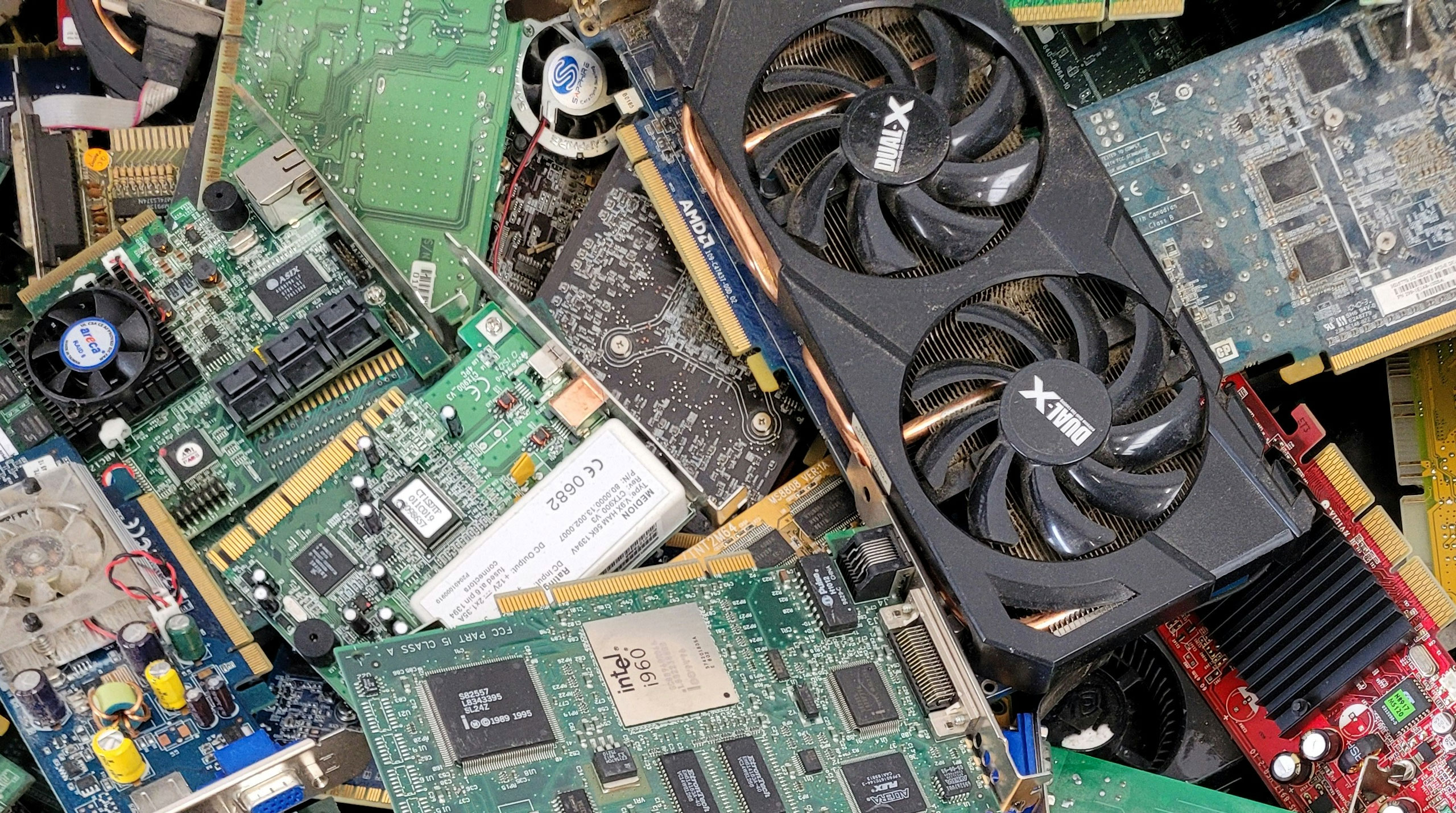
Electronic waste, or e-waste, consists of discarded electronics and their components. Almost anything with a plug, battery, or electrical circuitry falls into this category 2. Mobile phones, computers, and tablets are obvious culprits, but e-waste encompasses a wide variety of items.
Categories include large equipment like refrigerators, microwaves, washing machines, and smaller equipment like toasters, vacuums, toys, electric tools, and medical devices. Even fluorescent and LED lights are considered e-waste 3. Office equipment like printers, keyboards, and monitors is also a key type of e-waste. 4.
However, not all electronics are considered e-waste, despite sharing many of the same components. Some items like batteries and vehicle parts have their own separate categories 5. However, these definitions may change as countries create new legislation regarding e-waste.
Why is the amount of e-waste increasing?
Advancements in technology are one reason for the increasing consumption of electronic devices. Lower prices due to tech innovations and manufacturers who make repairs more difficult often make it cheaper to buy a new product than to repair the old one.
Another reason is companies’ desire to increase sales; companies use perceived or planned obsolescence to encourage consumers to replace their electronics more often. Perceived obsolescence is a strategy where companies use marketing to entice consumers to buy the newer models of electronics.
They appeal to consumers’ interest in trends and status symbols associated with new devices 6. Companies may release new products in quick succession, with minor differences between them, to lure consumers to replace fully functional older products.
With planned obsolescence, companies intentionally create short product life cycles to increase sales of their products. This may include changing or omitting ports, requiring purchase of proprietary equipment, using updates to slow older devices, making repairs difficult, or ending support for older products 7 8.
Why is e-waste a problem?
E-waste threatens both the environment and human health because of the hazardous materials it contains. Components of e-waste include materials like mercury, lead, silver, plastics, and flame-retardants 9. This waste is not biodegradable, and when disposed of improperly, toxic metals and chemicals can leach into the soil and water supplies.
The Global North, which creates a large percentage of the world’s e-waste, exports much of it to the Global South. There, salaries are lower, and fewer regulations and worker protections result in dangerous working conditions 10. Workers often must rely on dangerous methods to extract valuable metals. Acid baths used to harvest minerals release harmful toxins, and burning e-waste releases heavy metals like lead, cadmium, chromium, and copper into the air. 11 12.
Women and children are most at risk. Many children work in e-waste disposal because their smaller hands allow them to pick apart small equipment 13. Exposure to hazardous materials in waste is linked to cancer, neurodevelopment and learning disabilities, respiratory problems, birth defects, and miscarriage 14.
Throwing Away Resources
When we do not recycle e-waste, we lose the valuable and sometimes scarce materials that they contain. This waste may contain gold, copper, titanium, platinum, and other valuable materials 15. In 2022, the value of metals in e-waste was approximately USD 9 billion 16.
Very little of these mineral resources, some of which are rare earth elements, present in this waste is harvested and reused (The Growing Environmental Risks of E-Waste, 2026). In 2022, only 22.3% of the 62 billion kg of e-waste produced was sustainably recycled 17.
As discussed in a previous Digital Peace article, these minerals are difficult to extract and process 18. Mining them creates substantial amounts of CO2 emissions, along with other environmental problems. When we recycle and reuse these minerals instead of mining for more, we reduce emissions and the threat of global warming.
Solutions
Although e-waste regulation exists, it is insufficient. Eighty-one countries, including the EU, have legislation in place. However, the US, the biggest producer of e-waste, has no national laws 19. The Basel Convention, an international treaty, regulates the export of e-waste to the global South but is not enforced consistently 20.
Manufacturers must be held accountable for the full life cycle of their products. Companies must have buy-back, recycling, and refurbishing programs to account for the end of life of their products. Global circular value chains would account for responsible sourcing of resources, manufacturing, use, and end of life 21. This would ensure that the full life cycle of a product is sustainable.
Better Recyling
One of the obstacles preventing higher recycling rates is the difficulty of extracting materials from e-waste. Although using recycled metals, rather than using virgin ore, is two to 10 times more energy efficient 22, the costs of these impediments are greater than the benefit.
Each device only has small quantities of valuable, recyclable material. Tons of e-waste may contain less than 1 kg of gold 23.
The design of electronic devices could make it easier and more profitable to separate recyclable components. Legislation is needed to require manufacturers to design products with this in mind.
One smartphone manufacturer has proven that it is possible to create more sustainable devices while making a profit. Fairphone, a Dutch company, manufactures smartphones, audio equipment, and spare phone parts.
Their devices are designed to last longer and to be repairable, and prices are comparable to mainstream products. Fairphone also has a reuse and recycle buy-back program 24.
The company claims 100% e-waste neutrality and promises long-term software support, so that a user could potentially use the same phone for many years 25. So, the question remains: – if Fairphone can do it, why can’t Apple and Samsung, too?
References
Thanks to Nathan Cima on Unsplash for the Header Image.
- Baldé, C. P., Kuehr, R., Yamamoto, T., McDonaled, R., D’Angelo, E., Althaf, S., Bel, G., Deubzer, O., Fernandez-Cubillo, E., Forti, V., Gray, V., Herat, S., Honda, S., Iattoni, G., Khetriwal, D. S., di Cortemiglia, V. L., Lobuntsova, Y., Nnorom, I., Pralat, N., & Wagner, M. (2024). The Global E-Waste Monitor 2024. United Nations Institute for Training and Research, International Telecommunication Union.
- Parajuly, K., Kuehr, R., Awasthi, A. K., Fitzpatrick, C., Lepawsky, J., Smith, E., Widmer, R., & Zeng, X. (2019). Future E-Waste Scenarios. StEP, UNU ViE-SCYCLE, UNEP IETC.
- Baldé, C. P., Kuehr, R., Yamamoto, T., McDonaled, R., D’Angelo, E., Althaf, S., Bel, G., Deubzer, O., Fernandez-Cubillo, E., Forti, V., Gray, V., Herat, S., Honda, S., Iattoni, G., Khetriwal, D. S., di Cortemiglia, V. L., Lobuntsova, Y., Nnorom, I., Pralat, N., & Wagner, M. (2024). The Global E-Waste Monitor 2024. United Nations Institute for Training and Research, International Telecommunication Union.
- Sampson, K. (2026, February 10). How to Categorize and Recylce the Common Types of Electronic Waste [Hummingbird International]. https://hummingbirdinternational.net/blog/e-waste-recycling/types-of-electronic-waste/
- Baldé, C. P., Kuehr, R., Yamamoto, T., McDonaled, R., D’Angelo, E., Althaf, S., Bel, G., Deubzer, O., Fernandez-Cubillo, E., Forti, V., Gray, V., Herat, S., Honda, S., Iattoni, G., Khetriwal, D. S., di Cortemiglia, V. L., Lobuntsova, Y., Nnorom, I., Pralat, N., & Wagner, M. (2024). The Global E-Waste Monitor 2024. United Nations Institute for Training and Research, International Telecommunication Union.
- Bisschop, L., Hendlin, Y., & Jaspers, J. (2022). Designed to break: Planned obsolescence as corporate environmental crime (Pt. 271-293). Crime, Law and Social Change, (78). https://doi.org/10.1007/s10611-022-10023-4
- Ahmed, S. F. (2016, September 29). The Global Cost of Electronic Waste. The Atlantic. https://www.theatlantic.com/technology/archive/2016/09/the-global-cost-of-electronic-waste/502019/
- Bisschop, L., Hendlin, Y., & Jaspers, J. (2022). Designed to break: Planned obsolescence as corporate environmental crime (Pt. 271-293). Crime, Law and Social Change, (78). https://doi.org/10.1007/s10611-022-10023-4
- Ahmed, S. F. (2016, September 29). The Global Cost of Electronic Waste. The Atlantic. https://www.theatlantic.com/technology/archive/2016/09/the-global-cost-of-electronic-waste/502019/
- Doane, S. (2023, November 26). The tragic cost of e-waste and new efforts to recycle. CBS News. https://www.cbsnews.com/news/the-tragic-cost-of-e-waste-and-new-efforts-to-recycle/
- Ahmed, S. F. (2016, September 29). The Global Cost of Electronic Waste. The Atlantic. https://www.theatlantic.com/technology/archive/2016/09/the-global-cost-of-electronic-waste/502019/
- The Growing Environmental Risks of E-Waste. (2026, February 14). Geneva Environment Network. https://www.genevaenvironmentnetwork.org/resources/updates/the-growing-environmental-risks-of-e-waste/
- World Health Organization. (2024, October 1). Electronic waste (e-waste). World Health Organization. https://www.who.int/news-room/fact-sheets/detail/electronic-waste-(e-waste)
- A New Circular Vision for Electronics: Time for a Global Reboot. (2019, January). World Economic Forum. https://www3.weforum.org/docs/WEF_A_New_Circular_Vision_for_Electronics.pdf
- Ahmed, S. F. (2016, September 29). The Global Cost of Electronic Waste. The Atlantic. https://www.theatlantic.com/technology/archive/2016/09/the-global-cost-of-electronic-waste/502019/
- Baldé, C. P., Kuehr, R., Yamamoto, T., McDonaled, R., D’Angelo, E., Althaf, S., Bel, G., Deubzer, O., Fernandez-Cubillo, E., Forti, V., Gray, V., Herat, S., Honda, S., Iattoni, G., Khetriwal, D. S., di Cortemiglia, V. L., Lobuntsova, Y., Nnorom, I., Pralat, N., & Wagner, M. (2024). The Global E-Waste Monitor 2024. United Nations Institute for Training and Research, International Telecommunication Union.
- Ramirez, R. (2024, March 20). Electronic waste has grown to record levels. Here’s why that’s a huge problem | CNN. CNN. https://www.cnn.com/2024/03/20/climate/electronic-waste-recycling-climate-un
- Bacurin, L. (2025, November 25). Rare Earth Elements: Technology’s Dirty Little Secret. Digital Peace. https://digital-peace.org/rare-earth-elements-conflict/
- Ramirez, R. (2024, March 20). Electronic waste has grown to record levels. Here’s why that’s a huge problem | CNN. CNN. https://www.cnn.com/2024/03/20/climate/electronic-waste-recycling-climate-un
- A New Circular Vision for Electronics: Time for a Global Reboot. (2019, January). World Economic Forum. https://www3.weforum.org/docs/WEF_A_New_Circular_Vision_for_Electronics.pdf
- The Growing Environmental Risks of E-Waste. (2026, February 14). Geneva Environment Network. https://www.genevaenvironmentnetwork.org/resources/updates/the-growing-environmental-risks-of-e-waste/
- The Growing Environmental Risks of E-Waste. (2023, January). Geneva Environment Network. https://www.genevaenvironmentnetwork.org/resources/updates/the-growing-environmental-risks-of-e-waste/
- The Growing Environmental Risks of E-Waste. (2026, February 14). Geneva Environment Network. https://www.genevaenvironmentnetwork.org/resources/updates/the-growing-environmental-risks-of-e-waste/
- We are Fairphone. Our journey so far. (n.d.). Fairphone. Retrieved May 31, 2026, from https://www.fairphone.com/about-us
- Fairphone 6 Hits US for $899: 8-Year Support Changes Game. (2025, October 31). Gadget Hacks. https://smartphones.gadgethacks.com/news/fairphone-6-hits-us-for-899-8-year-support-changes-game/