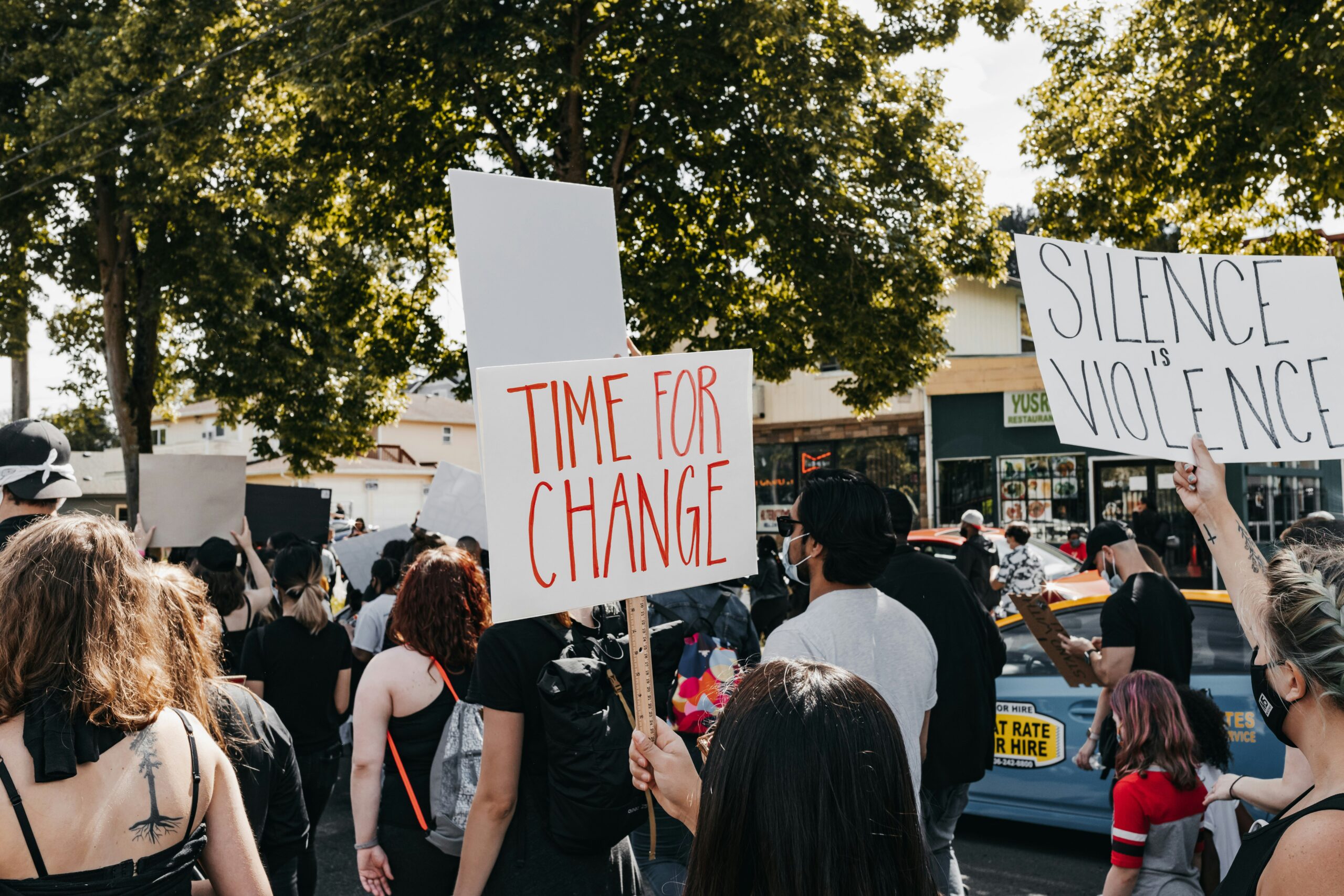
The term grassroots, according to the Cambridge Dictionary, refers to a “bottom-up” approach. In contrast to being led by elite, leadership or the established hierarchy, the ordinary, everyday people in a society, community, or organization drive grassroots initiatives, where ideas, campaigns, and movements originate at the base and are built by the community itself.
Can grassroots initiatives create a real impact and resonate across a society — especially one that hears, day after day, that artificial intelligence is about to transform every part of its life?
To find out, I sat down with a Spanish non-profit association, VigÍA, where my role is a vice president. VigÍA´s slogan is the Right to Understand. Founded by people from strikingly different professional worlds, VigÍA has set itself the task of building AI literacy from the ground up, one classroom, one company, and one conversation at a time.
The founders I spoke with are Moisés Ruiz, José A. Bartolomé, Maite Sáenz Barc, and Jeremy Mederos. Moises is a software engineer and educator with extensive experience managing technological processes in the industrial and pharmaceutical sectors. José is a professor with a background in public administration, digital innovation, and sustainability, whose work bridges education, public policy, and responsible technology. Maite is a philosopher with broad experience in design and the arts. Alongside them, I also spoke with Jeremy Mederos, a professor at Universidad Tecnológica Atlántico Mediterráneo UTAMED, a researcher at OdiseIA and Google Cairé, and a communicator who came to VigÍA through his own students.
Williams Mérida, also one of VigÍA’s founders, could not participate in this interview for personal reasons. However, he has played a key role in the association from the beginning. His journey is exemplifies the dialogue between technology and the humanities: after building a career in a STEM field, he went on to study digital ethics and has been actively involved in discussions around the social impact of technology.
I put the same five questions to all four founders. Below are their responses.
1. What is your perspective on the development of AI and its impact on society?
Moisés: AI marks a historic turning point that goes far beyond simple digitalization or past milestones like the steam engine or the internet. Unlike earlier revolutions, we are now dealing with technology that simulates cognitive functions and has its own agency that can make decisions and influence our behavior. This is both reshaping the economy and restructuring the entire social and professional fabric, dissolving traditional job structures and demanding constant adaptation from society.
José: AI is no longer a scenario for the future, as it is more the fabric of the present we already live in. Its impact is profound and often invisible, since we constantly interact with systems that shape everything from the content we consume to critical decisions about our jobs or finances. The real problem isn’t technological progress itself, but the growing gap between how fast that progress moves and how well citizens actually understand it. That gap leaves people as passive, vulnerable users unless society is given the conceptual tools to understand how these systems work. We’ve managed to build a technology that will transform our world, but we haven’t yet designed the world we want to integrate into.
Maite: AI is a genuine turning point — a real revolution, marking a before and after. What worries me is that at this time the depth of the change won’t touch everyone equally, and could widen existing gaps of inequality. AI will redefine work structures and rhythms, how we relate to one another, our habits, how we acquire knowledge, and even distinctly human capacities like freedom, privacy, and attention. It will also force us to rethink concepts as fundamental as “truth.” This calls for serious, collective work to understand how algorithms actually function, so their development stays balanced, transparent, and aligned with human evolution and fundamental rights.
Jeremy: The real paradigm shift is that we’ve stopped being able to think of technology as a simple tool at the service of humans. AI doesn’t just serve us — it constitutes us, redefines us, and transforms the environment we live in, creating a kind of “second nature”: an artificial niche that nonetheless becomes part of the natural way humans operate, and where things like art, writing, and literature keep unfolding. I see AI and the digital world as a new layer over our own cognition, a sort of additional layer on top of the neocortex — an infrastructure that expands our capabilities while it reorganizes who holds authority, power, and the ability to produce meaning. Its reach, he says, is total, touching every part of how we understand reality — and its impact is limited only by our imagination.
2. What motivated you to join VigÍA, and what do you hope to bring or find in this community?
Moisés: I joined because I believe firmly in the urgency of promoting digital AI literacy among both citizens and businesses. I want to contribute a vision of technological design that is ethical and human-centered, and I hope to help build a community that insists AI should never run on autopilot — that meaningful human oversight, with people retaining real control and the ability to intervene, is non-negotiable.
José: I am driven by a firm conviction: that we need to understand what AI means for our lives, and defend the right to understand it. There is no real democracy, and no genuine digital rights, if citizens don’t grasp the logic behind the technologies shaping their lives. I hope to bring my experience in education, public management, and other ethics-driven projects, with the goal of putting algorithmic literacy — and the right to understand — firmly on the public agenda. Within VigÍA, I hope to help build a space for reflection and proposals led by civil society itself, backed by legal and institutional advocacy that keeps technology from turning its back on citizens.
Maite: What drives me is the ethical depth behind VigÍA’s mission: literacy for people who use AI daily without fully understanding how it works, what its limits are, or what it implies. I am also moved by the entrepreneurial energy of its founders and their drive to turn that energy into real training initiatives — helping people understand algorithmic patterns, recommendation systems, data extraction, profiling, and the biases models can inherit from their training. I hope to contribute my professional experience and ability to translate complex ideas into practical terms, while finding a community for learning, reflection, and collaboration.
Jeremy: What pulls me in is finding people willing, not just to think about the future, but to actually step into it, without treating any particular outcome as inevitable — people passionate about technology but equally clear that it needs to serve a fairer, more responsible, more human society. In my case, those people turned out to be my own students. I found in them real independent thinking, and my classes stopped feeling like ordinary lessons and started feeling like something closer to a modern version of Plato’s dialogues. VigÍA grew organically out of that; our shared thinking stopped being just conversation and became a project. What I hope to bring is my energy and my talent for turning ideas into something concrete — and to keep meeting people who think the same way.
3. How do you use AI in your personal and professional life, and what limits matter to you?
Moisés: Day to day, I use AI as an instrumental support tool: it helps me code, review my writing, and generate personalized learning resources and pathways for my students. My one hard rule is to never take anything for granted and never trust AI blindly — I double-check its output and stay wary of its confident, “universal-sounding” answers.
José: Between my work in education and consulting, I use AI as a complementary tool — mainly to streamline tasks and organize information more efficiently. But I hold firm limits: critical judgment, ethical evaluation, and human empathy are absolutely non-delegable. Algorithms process data; the responsibility for meaning, fairness, and consequences remains, inescapably, ours.
Maite: Professionally, I rely on large language models to speed up administrative and bureaucratic tasks — drafting, summarizing, classifying, and structuring documents — freeing up time for more cognitive, creative, and strategic work. I also use generative AI to create infographics and translate ideas into visual formats, useful in teaching, and in daily life to plan trips and leisure activities. Still, I insist on constant human oversight: cross-checking information, avoiding sensitive data, and remembering that AI’s answers are probabilistic and can contain errors, biases, or hallucinations. These tools should never substitute for intellectual, creative, emotional, or personal-autonomy skills — those are part of each person’s identity, and need to keep being exercised and protected.
Jeremy: I treat AI as an assistant, an extension of my own thinking, especially when I am working alone — for research, testing ideas, organizing information, and speeding up both work and everyday tasks. But I keep clear limits: staying critically alert, taking responsibility for my own decisions, protecting my privacy, and holding on to spaces of experience, conversation, and creativity that aren’t filtered through an algorithm. I am deliberate about not letting AI replace talking to actual researchers — I still go out, talk to family, friends, even strangers, and keep showing up at conferences and seminars. Reality is bigger than data, and real knowledge lives in that reality, not just in what a model has ingested.
4. What opportunities and risks do you see for AI, in the short and long term?
Moisés: The opportunities are immense — especially AI’s capacity to process massive volumes of data and democratize access to knowledge that used to be tightly restricted. But the risks run just as deep. On an individual level, we risk a kind of cognitive atrophy or cognitive debt if we outsource our critical thinking to machines. As a society, the biggest danger is the restructuring of the labor market, which could open new gaps of inequality and exclusion if it isn’t managed fairly.
José: In the short term, the biggest opportunity is process optimization and democratized access to knowledge — with the immediate risk being algorithmic opacity and a kind of unconscious manipulation. Over the long term, the opportunity lies in building a more accessible and inclusive productive and educational fabric through ethical training. The systemic risk, however, is a deepening of a new kind of social inequality: an unbridgeable gap between a technical elite that controls the code and a majority that is only literate enough for passive consumption — exposed to automated decisions that are inexplicable, unfair, or discriminatory.
Maite: The opportunities are immense, at times unpredictable, and deeply transformative — able to open new possibilities across work, science, education, and creativity. In the short term, AI can automate repetitive tasks and improve how we manage large volumes of data. In the long term, it could reshape how organizations coordinate and how we make decisions. But the risks are real too: algorithmic bias, opaque models, concentration of technological power, mass surveillance, disinformation, and an uncritical substitution of human judgment. There is also a risk that’s often overlooked — the environmental cost, since training and running large models demands significant energy and water for data-center cooling.
Jeremy: Short term, I see real gains — expanding what we’re capable of, speeding up research, improving medicine, transforming education, freeing people from repetitive work. But the same period will also deepen inequality, job insecurity, surveillance, and the concentration of power in a handful of companies and institutions. Further out, the change runs deeper still: it won’t just change what we do, but how we define knowledge, work, autonomy, and even what it means to be human. The risk that worries me most with more advanced AI is systems developing goals or motivations of their own that drift from human interests — or a superintelligence acting on its own in ways our language can’t even fully explain, slipping past any fair or responsible social control.
5. How can we make the most of AI without giving up our critical judgment and autonomy?
Moisés: The key is staying in control of the process. We should always be the ones who initiate the creative process — bringing the original idea, the intent, the context. AI can be used like a “Socratic tutor,” an assistant that helps us test and compare information, but we should never hand it the final say on solving a problem or on our own ethical judgment.
José: My answer centers on a new kind of universal literacy — one I compare to what learning to read and write meant in the 19th century. We don’t need to turn every citizen into a data scientist, but we do need to teach people to ask the right questions in front of a screen. Critical thinking should be cultivated from childhood by demystifying technology: understanding that algorithms aren’t magic, but the product of human work — and can therefore carry errors and biases. Give people a strong conceptual and ethical foundation, and blind acceptance turns into vigilant, autonomous engagement.
Maite: I guess, the answer is algorithmic literacy: understanding, at least at a basic level, how machine-learning models work, how recommendation systems operate, how training data and bias shape outcomes, and why traceability and human oversight matter. That understanding should let us use AI to expand our own capacity for analysis and creation — while always verifying sources and taking responsibility for final decisions. I am especially concerned about young people, who are more exposed to profiling, data harvesting, and algorithmic persuasion, and whose privacy, attention, and freedom of choice need active protection.
Jeremy: For me, it comes down to using AI as an assistant, never as an epistemic authority — something that opens up possibilities without shutting down thought. That means holding on to responsibility for our own decisions, checking what AI tells us against reality, and talking it through with other people, because critical judgment doesn’t come from access to information alone — it comes from dialogue, lived experience, and running into perspectives different from our own. Autonomy means not letting AI think in our place: its job is to help us ask better questions, not to decide which answer we like or which ones we’re supposed to accept. In an age where speed gets mistaken for truth, the real fight is over time — we have to actually own ours.
Tech Ethics as a Common Thread
Reading these answers, I feel that the common thread among such different voices, a software engineer, a history professor, a philosopher, and a communicator and researcher, is undoubtedly tech ethics. None of them came to VigÍA through the same door, yet they share a common commitment: don’t let the machine make the call that’s yours to make. Keep your judgment. Don’t confuse what’s efficient with what’s right.
VigÍA shows that AI literacy does not have to begin in governments, universities, or large technology companies. Grassroots initiatives can create real impact by helping people understand, question, and engage with AI in their everyday lives. In a world increasingly shaped by algorithms, the right to understand may be one of the most important civic rights of all.
But grassroots efforts cannot address these issues alone. They need to be seen and heard beyond their own circles, and they need the institutions and companies actually building this technology to care about the same things they do — not as a compliance line item, but as something they actually believe.
If these align, “bottom-up” stops being a slogan and starts being how a society decides, together, what it wants AI to be.
Thanks to Duncan Shaffer from Unsplash for the header image.